EcoWaterless Toilets Resource Centre

The Global Water Crisis

Why the future of humanity depends on restoring the water cycle—and why the way we think about sanitation must change.

Every civilisation has been built upon water.

Long before there were cities, roads or written languages, there were rivers. Along their banks, people learned that where water flowed, communities could settle, crops could grow, trade could develop and civilisations could emerge.

Water has always been far more than a commodity. It is part of the living circulation of the Earth, moving through atmosphere, forests, soils, rivers, aquifers, oceans, plants, animals and people. When that circulation is healthy, landscapes remain fertile and communities flourish. When it is disrupted, the effects reach into food, health, climate, settlement, migration and social stability.

The global water crisis is therefore not simply about running out of water. It is about the weakening of the relationships that allow water to be stored, cleansed, circulated and renewed.
01

Demand for freshwater is rising as populations, cities, agriculture and industry continue to expand.

02

Rivers, wetlands and aquifers are being depleted or polluted faster than many natural systems can recover.

03

Climate instability is changing rainfall, evaporation, drought patterns, floods and seasonal water availability.

04

Sanitation remains inseparable from water security, public health, dignity and environmental protection.

For generations, we behaved as though freshwater were limitless.

Modern societies were built around an assumption of abundance. Water could be diverted, pumped, treated and transported over great distances. Wastewater could be carried away through underground pipes. Rivers and aquifers appeared large enough to absorb whatever demands were placed upon them.

That assumption helped create extraordinary gains in public health, agriculture and urban development. Yet it also hid the true cost of our water systems. The energy required to move water, the loss of rivers and wetlands, the depletion of groundwater, the pollution of waterways and the disruption of natural cycles were often treated as distant side effects.

Today, that illusion is fading. Many communities are discovering that water security cannot be maintained simply by extracting more water from somewhere else.

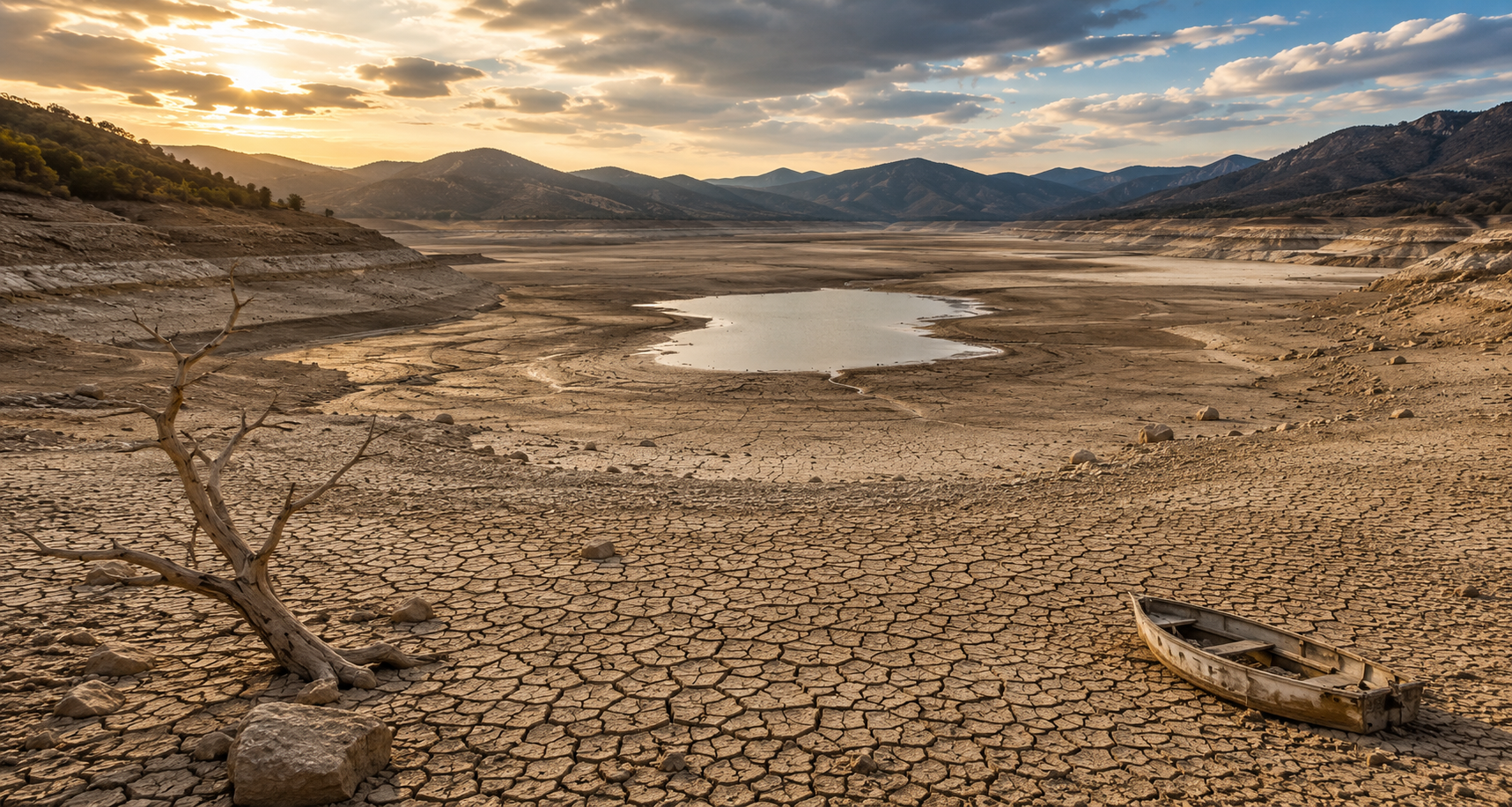
A dry reservoir illustrating prolonged water scarcity
A growing city placing pressure on regional water supplies

The crisis is emerging through many connected pressures.

Population growth is only part of the story. Rising living standards, expanding cities, intensive agriculture, industrial development and changing diets all increase demand.

At the same time, forests are being removed, soils compacted, wetlands drained and river systems altered. These changes can reduce the ability of landscapes to absorb rainfall and release it slowly over time.

  • Groundwater is being withdrawn faster than it is replenished.
  • Rainfall is becoming less predictable in many regions.
  • Floods and droughts are becoming more disruptive.
  • Pollution is reducing the amount of water that remains safe to use.
  • Rapid urbanisation is increasing pressure on ageing infrastructure.
The future of water will not be secured by a single invention. It will be secured by restoring relationships between land, climate, water, sanitation and community.
EcoWaterless Toilets

Water security and sanitation cannot be separated.

Public discussion often focuses on where clean water comes from. Far less attention is given to what happens after it is used.

Sanitation systems protect health and dignity, but they also shape how water is consumed, contaminated, treated and returned to the environment. In conventional systems, large volumes of water may be used to transport relatively small quantities of human waste through pipes to distant treatment facilities.

In many places, this model works well. In others, it is costly, difficult to maintain or simply impossible because there is no sewerage network, insufficient water, unreliable power or inadequate treatment capacity.

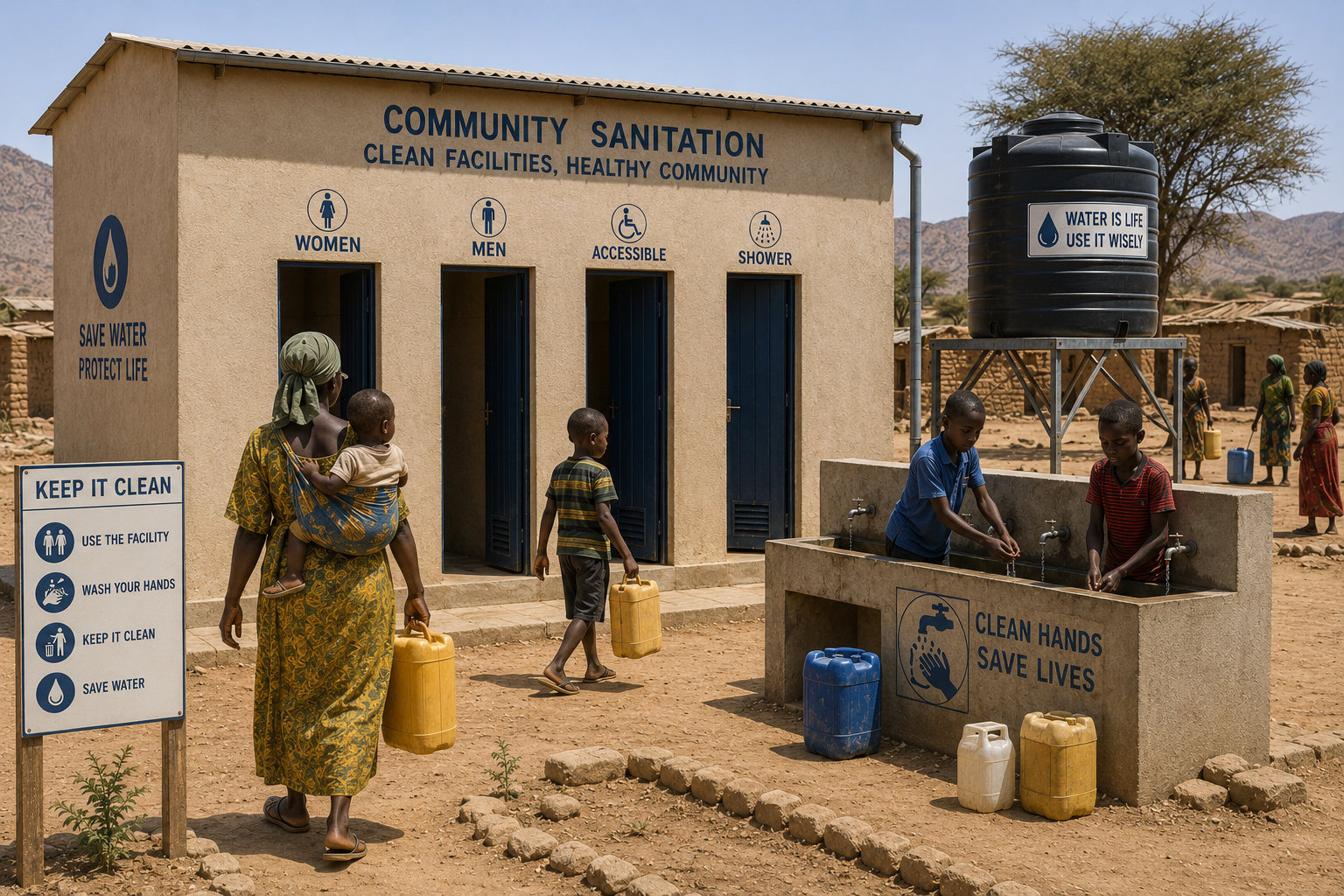
Community sanitation facilities in a water-stressed region
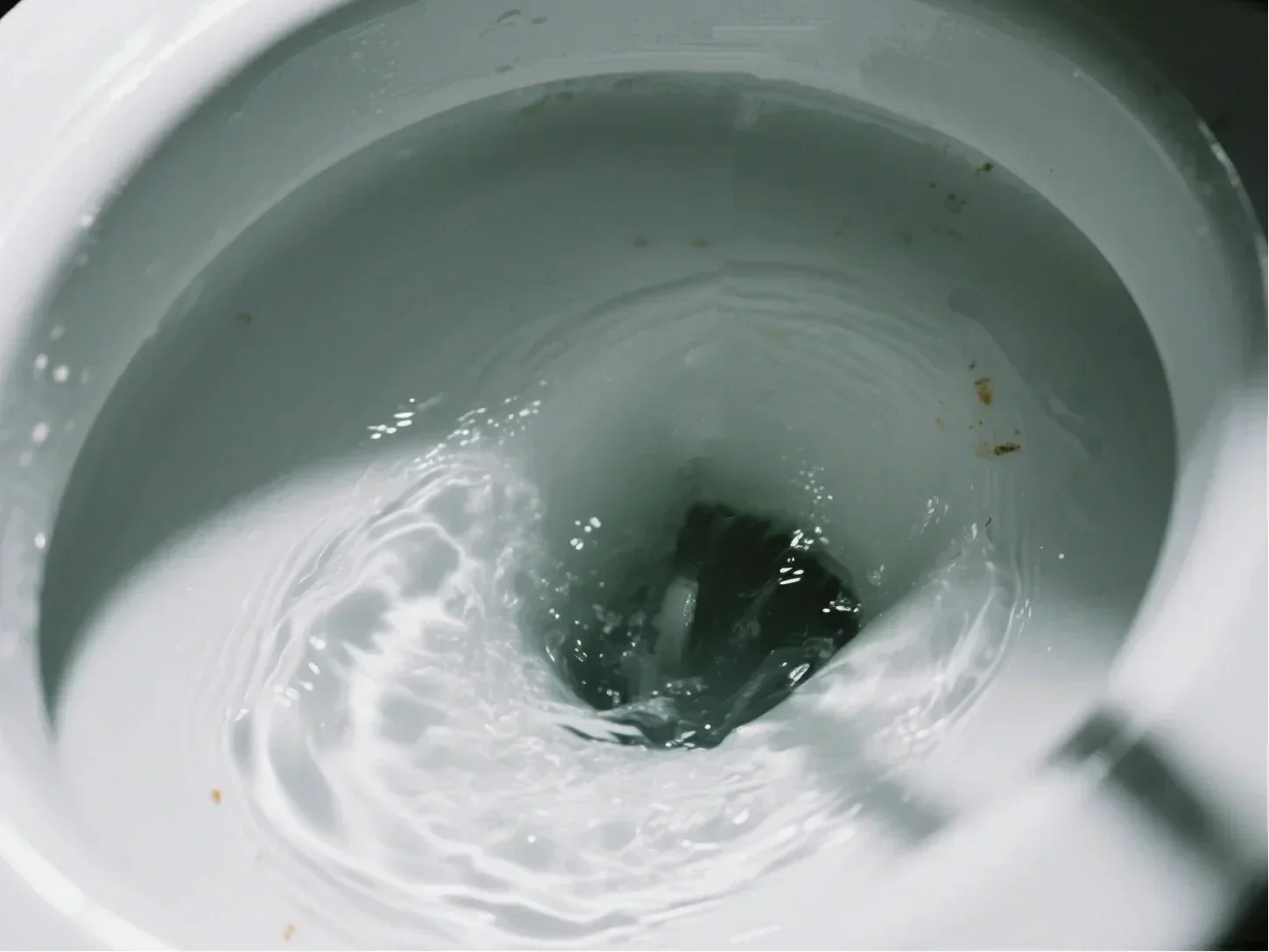
Clean water flowing into a conventional flush toilet

One of history's great public-health achievements has become increasingly difficult to sustain everywhere.

The flush toilet transformed urban sanitation and saved countless lives by separating human waste from streets, homes and drinking-water sources.

Yet the system depends on reliable water, extensive pipe networks, energy, treatment facilities, skilled maintenance and the capacity to manage wastewater safely.

In water-scarce, remote, temporary or rapidly growing communities, these requirements may be impractical. The challenge is not to reject the achievements of modern sanitation, but to recognise that different settings require different solutions.

Sanitation can protect health without always depending on large volumes of water.

A more resilient future will combine water conservation, wastewater treatment, ecological restoration, local innovation and sanitation systems suited to their setting.

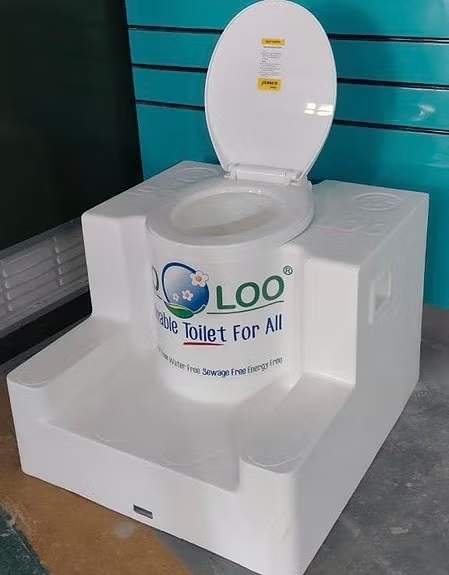
EcoLoo waterless sanitation system for public use

Large-Scale Waterless Sanitation

Public facilities, humanitarian projects, remote communities, festivals and high-use locations may need systems that operate without conventional sewerage or continuous water supply.

Explore EcoLoo
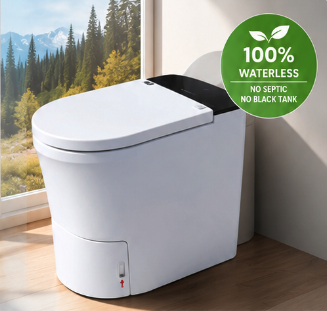
T02 electric incinerating waterless toilet in an off-grid setting

Off-Grid and Small-Scale Solutions

Cabins, tiny homes, boats, recreational vehicles and remote buildings require compact systems suited to local conditions, user numbers and available power.

Explore the T02
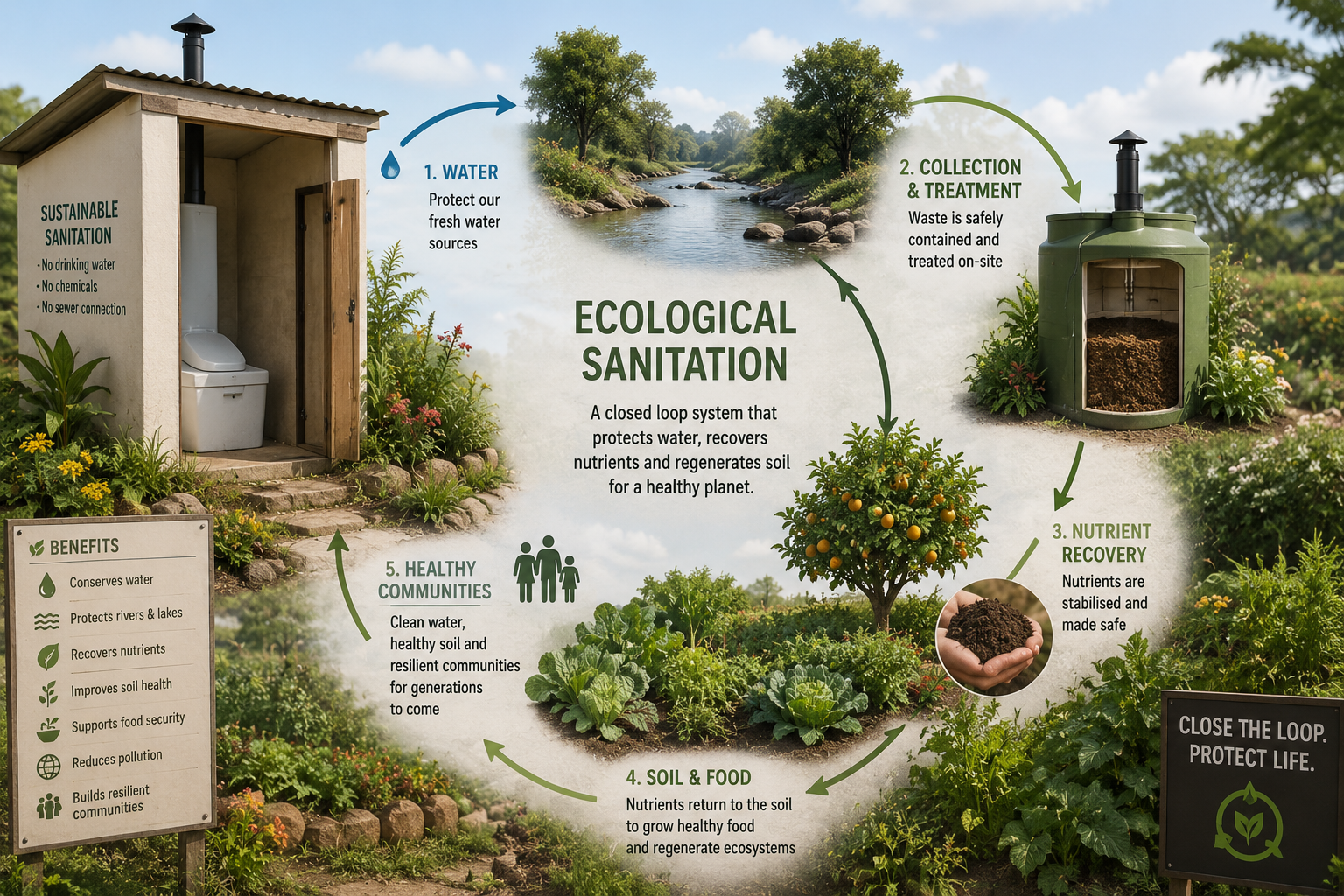
Ecological sanitation concept connecting water, nutrients and soil

Ecological Sanitation

Ecological sanitation asks whether waste can be managed as part of a circular system rather than simply mixed with water and transported away.

Explore Ecological Sanitation

The water crisis is vast, but practical change begins locally.

Use water more carefully. Reduce avoidable consumption and recognise the energy and infrastructure embedded in every litre delivered.
Choose systems suited to place. Match sanitation technology to climate, water availability, user numbers, maintenance capacity and regulation.
Protect the wider water cycle. Support healthy soils, forests, wetlands, waterways and groundwater recharge.
Learn from real-world experience. Study projects that demonstrate what works, what fails and what conditions shape successful outcomes.

Waterless sanitation is not the whole answer—but it is an important part of a larger transformation.

The challenge before us is to create sanitation systems that protect health, preserve dignity, conserve water and operate within the ecological realities of each place.