Denis McCarthy
Publisher and Editor of Whole Life Times, with a background spanning reference librarianship, clinical psychology, publishing, sustainable living and community education.
Read the full Publisher & Editor story →A small core team within a much larger community of relationships.
Whole Life Times has never been produced by a large conventional publishing organisation. Across its history, it has depended instead upon a relatively small core of people who care deeply about the publication and its purpose, surrounded by a much wider circle of contributors, advisers, friends, interviewees, collaborators and supporters.
That pattern continues today. The present WLT team brings together publishing, editing, research, sustainability, social change, psychology, education and long-standing involvement in the alternative and ecological movements from which Whole Life Times originally emerged. Each person brings a different history and perspective, and those differences are part of what gives WLT its breadth.
The roles differ, but the common thread is a long-standing commitment to ideas and practical work that contribute to healthier people, more humane communities and a flourishing living Earth.
Publisher and Editor of Whole Life Times, with a background spanning reference librarianship, clinical psychology, publishing, sustainable living and community education.
Read the full Publisher & Editor story →Associated with WLT since its early years, Sasha brings a long-standing interest in architecture, sustainability, filmmaking, Buddhism, alternative living and planetary transformation.
Co-Editor of Whole Life Times, bringing extensive experience in academia, social justice, group facilitation, nonviolence, anthropology, sociology, multiculturalism and women's issues.
Denis McCarthy is the Publisher and Editor of Whole Life Times and has been closely identified with the publication since its beginnings in 1982.
His relationship with publishing, however, began somewhat earlier. In the late 1970s he became involved in alternative lifestyle, environmental and community education activities in Western Australia, including the Down To Earth Association and the growing permaculture movement. His earlier work as a reference librarian also shaped a lifelong interest in helping people find their way through knowledge and in making connections between subjects that are too often treated separately.
Whole Life Times grew naturally out of that combination of interests. Rather than being conceived simply as another magazine, it became a form of community education and a way of bringing together ideas and people concerned with holistic health, ecology, psychology, consciousness, sustainable living, social change and the possibilities of human transformation.
Over the decades Denis's professional life also developed through clinical psychology, publishing, books and recordings, sustainable living, Gaiarcadia and related educational initiatives. Those different strands now come together again through Whole Life Times and the wider Whole Life Universal Field.
His role as Editor is therefore not only to commission and prepare articles. It is also curatorial: identifying people worth listening to, following relationships between ideas, conducting WLT Dialogues, bringing older material back into circulation, developing new areas of inquiry and helping the growing WLT archive become part of an interconnected field of knowledge.
A fuller account of that story can be found on the separate Publisher & Editor page.
Sasha Ivanovich has been associated with Whole Life Times since its early years. The earlier version of this page described him as a “renaissance man” who appeared in the Autumn 1983 issue of WLT, and identified his background in architecture, sustainability, filmmaking, Buddhism and alternative living.
That combination of interests makes Sasha particularly at home within the Whole Life perspective.
His work and thinking have long crossed boundaries between the built environment, sustainable design, ecological responsibility, culture and human wellbeing. Rather than treating architecture simply as the design of buildings, his interests have reflected the larger question of how human beings inhabit places and how the environments we create can support—or undermine—the wellbeing of people and the Earth.
Sasha's involvement also connects the contemporary WLT with the alternative-lifestyle culture of the early 1980s from which the publication grew. That historical continuity matters. Whole Life Times has changed enormously since those years, but its interest in sustainable ways of living, more humane communities and the relationship between personal and planetary transformation remains recognisable.
Today Sasha continues as part of the WLT team, contributing the perspective of someone whose life and work have long explored the practical and cultural dimensions of sustainability.
Cheryl Lange has been an important part of the contemporary Whole Life Times editorial team and is currently Co-Editor of the magazine.
The previous Our Team page noted her return to WLT after a substantial academic career and referred to her doctoral work on the Greens in Western Australia, group facilitation and leading nonviolence training, together with her interests in anthropology, sociology, multiculturalism, social justice and women's issues.
Those interests sit naturally within the wider WLT field. They bring attention not only to the personal dimensions of change but also to the social, cultural and political conditions within which people live. Questions of ecological sustainability cannot easily be separated from questions of justice, participation, power, culture and community, and Cheryl's background brings those relationships into the editorial conversation.
Her contribution is also highly practical. Editing a publication such as Whole Life Times requires far more than selecting interesting subjects. It involves reading, questioning, clarifying, proofreading, checking whether ideas communicate well and helping transform sometimes complicated material into something that readers can readily engage with.
Recent WLT issues continue to credit Cheryl as Co-Editor, and her contribution has become an important part of the revived magazine's development.
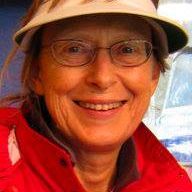
Although Denis, Sasha and Cheryl form the present core team, describing Whole Life Times only in terms of formal roles would miss much of how the publication actually works.
WLT has always developed through relationships. An idea for an issue may arise through a conversation. Someone may recommend a guest for WLT Dialogues. An interview may lead to an article. A contributor may introduce another contributor. A book may lead to its author, an organisation to a researcher, or a Gaiarcadia speaker to an entirely new line of inquiry.
For that reason, there has always been a somewhat porous boundary between “the team” and the wider community around Whole Life Times. Some people contribute intensively for a period and then move into other work. Others remain friends, advisers or occasional collaborators across decades. Still others first enter the WLT field through one interview or article and later become part of a much longer relationship.
The separate Contributors page explores this wider ecology in more depth.
Rodney King was included as a member of the earlier WLT team and remains part of the publication's history, although he is no longer actively involved today.
The earlier Our Team page described Rodney as a former journalist with WA Newspapers who left journalism in the mid-1970s to work independently, publishing DTE Magazine and later Earth News and Aquarius Rising, before spending many years in Singapore and subsequently returning to book writing.
That background places him within the same broad alternative-media and social-change culture that helped give rise to Whole Life Times. His inclusion here is therefore more than a courtesy to a former team member. It acknowledges something important about the history of independent publishing in which WLT itself participated.
Whole Life Times has been fortunate to be accompanied over the years by people whose paths have crossed with the publication for different lengths of time. Some remain active today; others belong primarily to its history. Both are part of the story.
Allies and Associates are people whose work, friendship, ideas or collaboration have helped enrich WLT, even though they are not members of the day-to-day editorial team.
Dr Emmett Miller has long been recognised internationally for his work in mind-body medicine, self-healing and the use of guided imagery and related approaches to wellbeing.
His work represents a strand of holistic health that has been central to Whole Life Times from its earliest years: the understanding that human health involves relationships among body, mind, emotion, behaviour, environment and meaning rather than isolated symptoms alone.
His long association with WLT also reflects the kind of relationship we hope the publication can continue to foster—one in which important practitioners and thinkers remain part of an extended community across many years rather than appearing once and disappearing.
Peter Le Breton's association with alternative education, books, sustainability and transformative thinking reaches back to the cultural world from which Whole Life Times emerged.
After moving to Western Australia from Canberra in 1976, where he had run the Alternative Bookshop, Peter became associated with the much-loved Down To Earth Bookshop in Perth. His later academic work included a PhD in Transformative Studies from the California Institute of Integral Studies, with interests spanning identity, consciousness, systems thinking and the ecology of mind.
Those interests exemplify the integrative character of WLT itself. Books, consciousness, psychology, ecology and systems thinking can appear to belong to different intellectual territories, yet much of the Whole Life inquiry consists precisely in exploring how those territories connect.
The small scale of the formal WLT team should not be mistaken for a small field of activity.
Around the core team is a growing network of writers, interviewees, thinkers, researchers, artists, photographers, advisers, organisations, readers, Ambassadors, Supporters, Donors, Sponsors and Partners. The new Contributors page has been created specifically to recognise that broader understanding of participation.
And that network is likely to become increasingly important as Whole Life Times develops. The expanding WLT Dialogues programme brings new voices into the publication throughout the year. WLT Dialogues Live will create another way for people to participate directly in selected conversations. The Subject Directory will progressively reconnect contemporary material with more than four decades of earlier WLT publishing. Gaiarcadia Academy and its Summits extend the field into education and international dialogue. And the gradual development of the Whole Life Universal Field of Knowledge will make relationships among people, ideas and resources increasingly visible.
The team therefore has an unusual role. It is not simply responsible for producing a magazine. It helps cultivate a field of relationships within which many other people can contribute.
That perhaps brings us closest to what Whole Life Times has always been.
A small number of people help hold the publication together, but its real richness comes from the many lives, experiences, ideas and relationships that meet within it. The team helps create the meeting place. The wider Whole Life Times community continually enlarges what can happen there.
Explore Contributors Contact Whole Life Times